Batteries in South Africa
Premium Battery Solutions for Backup Power, Solar Systems & Energy Storage – Keep Your Systems Running During Load Shedding

Complete Battery Solutions for Every Power Need
PHD Powerhouse supplies comprehensive battery solutions from UPS batteries to solar energy storage systems. We specialize in semi-sealed UPS batteries, deep cycle solar batteries, lithium battery systems, battery cabinets, and complete backup power solutions. With quality brands like Vision Batteries and AEC Lithium available, we provide total solutions to backup power requirements across South Africa.
Our highly trained sales team delivers expert advice and service, ensuring your investment in battery backup power is reliable, long-lasting, and profitable. We provide comprehensive service support on all battery products and installations.

What Are Backup Power Batteries?
Backup power batteries are energy storage devices that provide electrical power when your main power source fails or becomes unavailable. Unlike automotive starter batteries, backup power batteries are designed for deep discharge cycles and sustained power delivery. Quality backup batteries protect your equipment, prevent data loss, and ensure business continuity during South Africa’s frequent power disruptions.
3 Critical Reasons You Need Quality Batteries
1. Uninterrupted Power During Load Shedding
With South Africa experiencing frequent load shedding, quality batteries ensure your home and business remain operational. Whether powering computers, lighting, security systems, or essential appliances, the right battery solution keeps you connected and productive during power outages.
2. Energy Storage for Solar Systems
Solar batteries store excess energy generated during the day for use during peak demand periods or at night. Deep cycle batteries are specifically engineered for solar applications, providing reliable storage that maximizes your solar investment and reduces grid dependency.
3. Protection for Sensitive Equipment
Quality batteries provide clean, stable power that protects sensitive electronics, medical equipment, and data systems from the damaging effects of power fluctuations. Combined with UPS systems, they ensure critical equipment receives consistent, reliable power.
Battery Types Available in South Africa
PHD Powerhouse supplies four main battery categories, each designed for specific applications and power requirements. Choose the right battery type based on your backup power needs, budget, and application.

UPS Batteries (Semi-Sealed)
Semi-sealed UPS batteries are specifically designed for uninterruptible power supply systems, providing reliable backup power for computers, servers, networking equipment, and business systems. These lead-acid batteries offer economical power storage with proven reliability.
Best For: UPS systems, computer backup, small business servers, home office equipment, networking infrastructure, and telecommunications systems.
Key Benefits: Cost-effective solution, proven lead-acid technology, maintenance-free operation, excellent reliability, available in multiple capacities (7.2Ah to 100Ah+), and ideal for short to medium duration backup power.
Battery Sizes Available: 7.2Ah, 8Ah, 9Ah, 12Ah, 17Ah, 20Ah, 24Ah, 28Ah, 33Ah, 45Ah, 75Ah, 100Ah
Solar Batteries (Deep Cycle)
Deep cycle solar batteries are fully sealed batteries engineered for renewable energy applications. Unlike starter batteries, these batteries handle repeated deep discharge cycles, making them perfect for solar panel systems, off-grid installations, and renewable energy storage.
Best For: Solar panel systems, off-grid power, wind power storage, renewable energy systems, backup power for homes, and camping/mobile applications.
Key Benefits: Deep discharge capability (up to 80% DOD recommended), designed for daily cycling, fully sealed maintenance-free construction, thick lead plates for longevity, compatible with solar regulators and inverters, and excellent for sustained power delivery.
Applications: Stand-alone solar systems, grid-tied solar with battery backup, wind turbine storage, hydroelectric systems, and mobile power solutions.
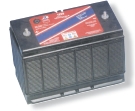
Lithium Batteries
Lithium battery technology represents the latest advancement in energy storage. Offering superior energy density, longer lifespan, faster charging, and lighter weight compared to traditional lead-acid batteries, lithium systems are ideal for modern power applications.
Best For: High-performance UPS systems, solar energy storage, electric vehicles, advanced backup power systems, and applications where weight and space are critical.
Key Benefits: Longer lifespan (2-3x lead-acid), lighter weight (up to 70% lighter), faster charging capabilities, deeper discharge without damage, low maintenance requirements, better performance in extreme temperatures, and higher energy density.
Available Models: AEC Lithium Low Voltage Energy Storage Systems, 100-45 AHr Lithium batteries
Battery Cabinets
Battery cabinets provide secure, organized, and professional housing for battery banks. Available in multiple configurations, our steel cabinets accommodate various battery quantities and sizes, offering both bottom and top entry for easy DC connections.
Best For: UPS battery banks, server room installations, data centers, telecommunications facilities, and professional backup power installations.
Key Benefits: Space-saving design, acid-resistant powder coating, removable hinged doors for easy access, lockable for security, front terminal battery compatibility, removable side panels for cable installation, sturdy steel construction, and available in sizes from A1 (2-6 batteries) to A35 (35-270 batteries depending on capacity).
Cabinet Sizes: A1, A2, A4, A8, A12, A20, A35
Battery Backup Systems
Complete battery backup systems combine batteries, inverters, and charging systems in ready-to-use packages. These turnkey solutions provide immediate backup power for homes and businesses during load shedding and power failures.
Best For: Home backup power, office systems, gate motors, garage doors, TV and entertainment systems, security systems, lighting, and small appliances.
Key Benefits: Complete plug-and-play solution, automatic switchover during outages, silent and fume-free operation, portable for camping/mobile use, low battery warning systems, automatic recharge when power returns, overload protection, and scalable power capacity.
Typical Runtime: Several hours for lights, TV, computers, and essential appliances (capacity dependent).
Battery Specifications & Technical Information
Battery Selection Guide
Choosing the right battery depends on several factors:
- Application Type: UPS backup, solar storage, or general backup power
- Required Capacity: Measured in Amp-hours (Ah) – determines runtime
- Discharge Depth: Deep cycle vs. shallow cycle requirements
- Cycle Life: How many charge/discharge cycles needed
- Physical Size: Available space and weight considerations
- Budget: Initial cost vs. long-term value
Battery Cabinet Configuration Table
Quick reference for battery cabinet capacity:
| Cabinet | 7.2Ah | 12Ah | 17Ah | 24Ah | 33Ah | 45Ah | 75Ah | 100Ah |
|---|---|---|---|---|---|---|---|---|
| A1 | 6 | 4 | 5 | 2 | 3 | 2 | 1 | 1 |
| A2 | 12 | 8 | 10 | 4 | 6 | 4 | 2 | 2 |
| A4 | 24 | 16 | 20 | 8 | 12 | 8 | 4 | 4 |
| A8 | 60 | 40 | 40 | 16 | 24 | 16 | 12 | 8 |
| A12 | 90 | 60 | 60 | 24 | 36 | 24 | 18 | 12 |
| A20 | 150 | 100 | 100 | 40 | 60 | 40 | 30 | 20 |
| A35 | 270 | 180 | 180 | 80 | 105 | 70 | 50 | 35 |
Battery Maintenance Tips
- Regular Inspection: Check terminals for corrosion and ensure tight connections
- Temperature Control: Keep batteries in cool, dry environments (ideal: 20-25°C)
- Proper Charging: Use appropriate charging systems with correct voltage settings
- Depth of Discharge: Limit discharge to recommended levels (80% for deep cycle, 50% for UPS)
- Replacement Schedule: Replace UPS batteries every 3-5 years, solar batteries 5-7 years, lithium 10+ years
- Monitoring: Use battery monitors, voltmeters, and ammeters to track battery health
Why Choose PHD Powerhouse for Your Battery Needs?
Frequently Asked Questions About Batteries
How do I choose between UPS batteries and solar batteries?
UPS batteries (semi-sealed) are optimized for short-duration, frequent cycling in UPS systems. Solar batteries (deep cycle) are designed for daily deep discharge cycles in renewable energy applications. Choose UPS batteries for computer backup and solar batteries for solar panel systems or extended backup power with inverters.
How long do backup power batteries last?
Battery lifespan varies by type and usage. UPS batteries typically last 3-5 years, deep cycle solar batteries 5-7 years with proper maintenance, and lithium batteries 10+ years. Lifespan depends on temperature, depth of discharge, charging practices, and maintenance.
What size battery do I need for my application?
Battery sizing depends on your power requirements (watts) and desired runtime (hours). Calculate total wattage of equipment, multiply by hours of backup needed, and divide by battery voltage. Add 20-25% capacity for safety margin. Our experts can help with precise calculations.
Can I mix different battery types or brands?
No. Always use identical batteries (same brand, model, age, capacity) in a battery bank. Mixing different types causes uneven charging/discharging, reducing performance and lifespan. Replace all batteries in a bank simultaneously for optimal results.
What's the difference between sealed and semi-sealed batteries?
Semi-sealed (valve-regulated) batteries have pressure relief valves and require minimal maintenance. Fully sealed batteries are completely maintenance-free with no ability to add water. Both are safer than flooded batteries and suitable for indoor installation. Solar deep cycle batteries are fully sealed, while UPS batteries are typically semi-sealed.
How often should I replace my batteries?
Replace batteries based on age, performance, and testing results. UPS batteries: every 3-5 years. Solar batteries: every 5-7 years. Lithium batteries: 10+ years. Signs replacement is needed include reduced runtime, failure to hold charge, physical swelling, or repeated low voltage warnings.
Do lithium batteries work with existing UPS or inverter systems?
Not always. Lithium batteries require compatible charging systems with proper voltage profiles. Many modern UPS systems and inverters support lithium, but older systems designed for lead-acid may need upgrades. Consult with our experts before switching to lithium technology.
What battery cabinet size do I need?
Refer to our battery cabinet configuration table above. Calculate total batteries needed based on your capacity requirements, then select the appropriate cabinet size. Consider future expansion needs. Cabinets must accommodate battery dimensions and weight safely.
Protect Your Power Today
Don’t let load shedding disrupt your life or business. Invest in quality battery solutions and ensure continuous power when you need it most.
- Call Us Today
- Get Expert Battery Advice
- Professional Installation
- Complete System Design
- Ongoing Support
- Maintenance & Service