Voltage Stabilizers in South Africa
Automatic Voltage Regulators (AVR) for Homes, Businesses & Industry – Keep Your Voltage Stable Through Dips, Surges & Brownouts
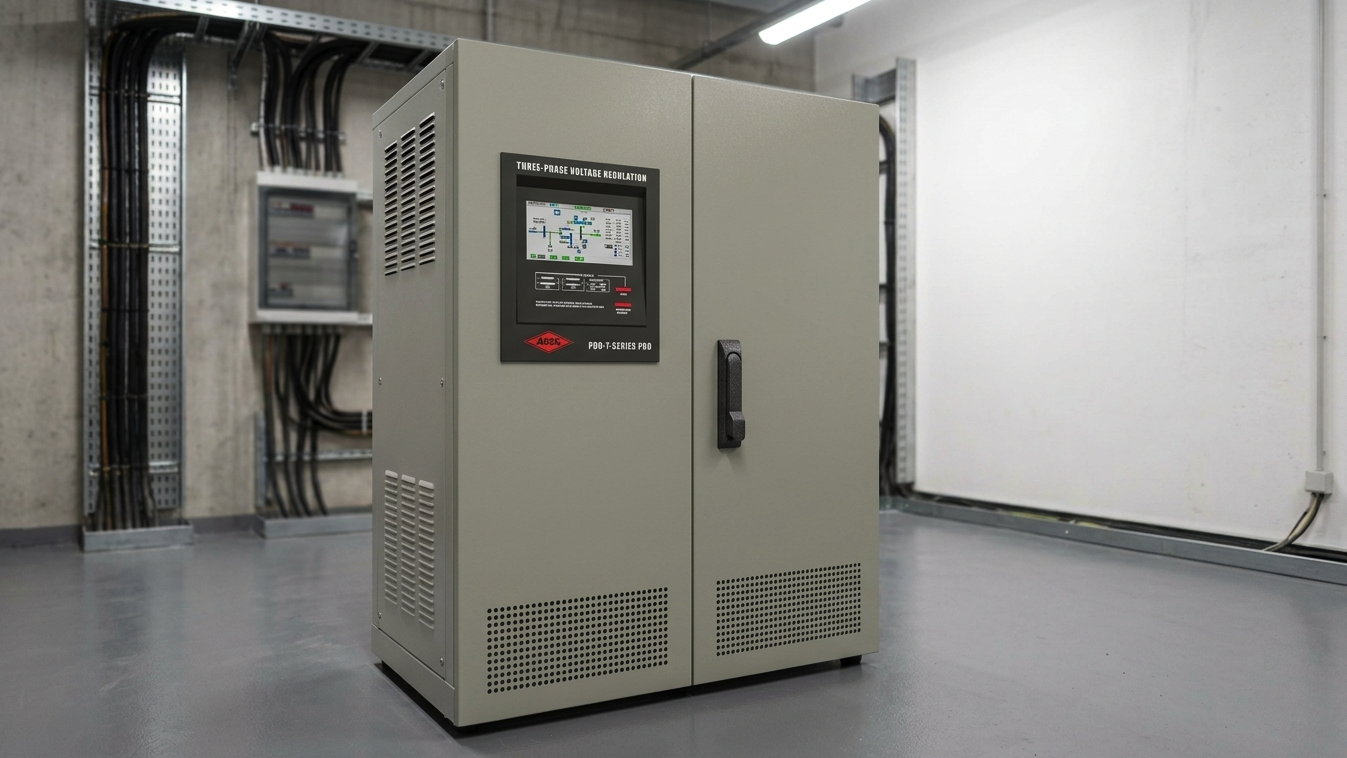
Complete Voltage Stabilizer Solutions for Every Application
PHD Powerhouse supplies a leading range of voltage stabilizers and automatic voltage regulators (AVRs) for South African homes, businesses and industrial sites. Our range includes single- and three-phase servo type voltage stabilizers, three-phase electronic type voltage stabilizers with optional isolation, Supervolt power voltage stabilizers and isolation transformers, including models designed for outdoor installation where space is limited.
Our highly trained sales team helps you size the right voltage stabilizer for your load and supply conditions, from a 500VA unit for a single appliance to a 100kVA three-phase system for a factory or commercial building.
What Is a Voltage Stabilizer?
A voltage stabilizer, also called an automatic voltage regulator (AVR), AC voltage stabilizer or voltage regulator, is an electrical device that automatically keeps the voltage supplied to your equipment at a constant level, even when the incoming mains voltage rises or falls. It continuously monitors the input voltage and boosts or reduces it, so connected equipment always receives the voltage it was designed for.
Important: A voltage stabilizer corrects voltage that is too high or too low. It does not supply power during a blackout or load shedding. For backup power, combine it with a UPS system or an inverter.
Brownout Correction
Boosts low incoming voltage back to the correct level, so motors and electronics don’t struggle or overheat.
Over-Voltage Protection
Reduces excessive voltage before it stresses or damages sensitive electronic equipment.
Longer Equipment Life
Stable voltage reduces wear on motors, compressors, power supplies and electronics, extending equipment lifespan.
Single & Three-Phase
Solutions for homes, offices, commercial buildings and industrial plants, from 500VA to 100kVA.
3 Critical Reasons You Need a Voltage Stabilizer
1. Unstable Supply Voltage in Many Areas
Many South African homes and businesses receive voltage outside the range their equipment is designed for. Long rural supply lines, overloaded networks during peak demand and network switching around load shedding can all cause the voltage to sag or rise. A voltage stabilizer corrects these fluctuations automatically.
2. Protect Motors, Compressors & Sensitive Equipment
Low voltage forces motors to draw more current and run hotter, which shortens the life of fridges, air conditioners, pumps and machinery. High voltage stresses power supplies and electronic components. Stable voltage protects both, and helps equipment perform as it should.
3. Reduce Downtime & Maintenance Costs
In industrial production, laboratories, medical facilities and IT environments, voltage problems cause equipment faults, inaccurate readings and unplanned stoppages. A correctly sized voltage stabilizer reduces these interruptions and the repair costs that follow.
Voltage Stabilizer Types Available in South Africa
PHD Powerhouse supplies four main voltage stabilizer and voltage regulation categories. Choose the right type based on your load, how quickly your supply voltage changes, and where the unit will be installed.
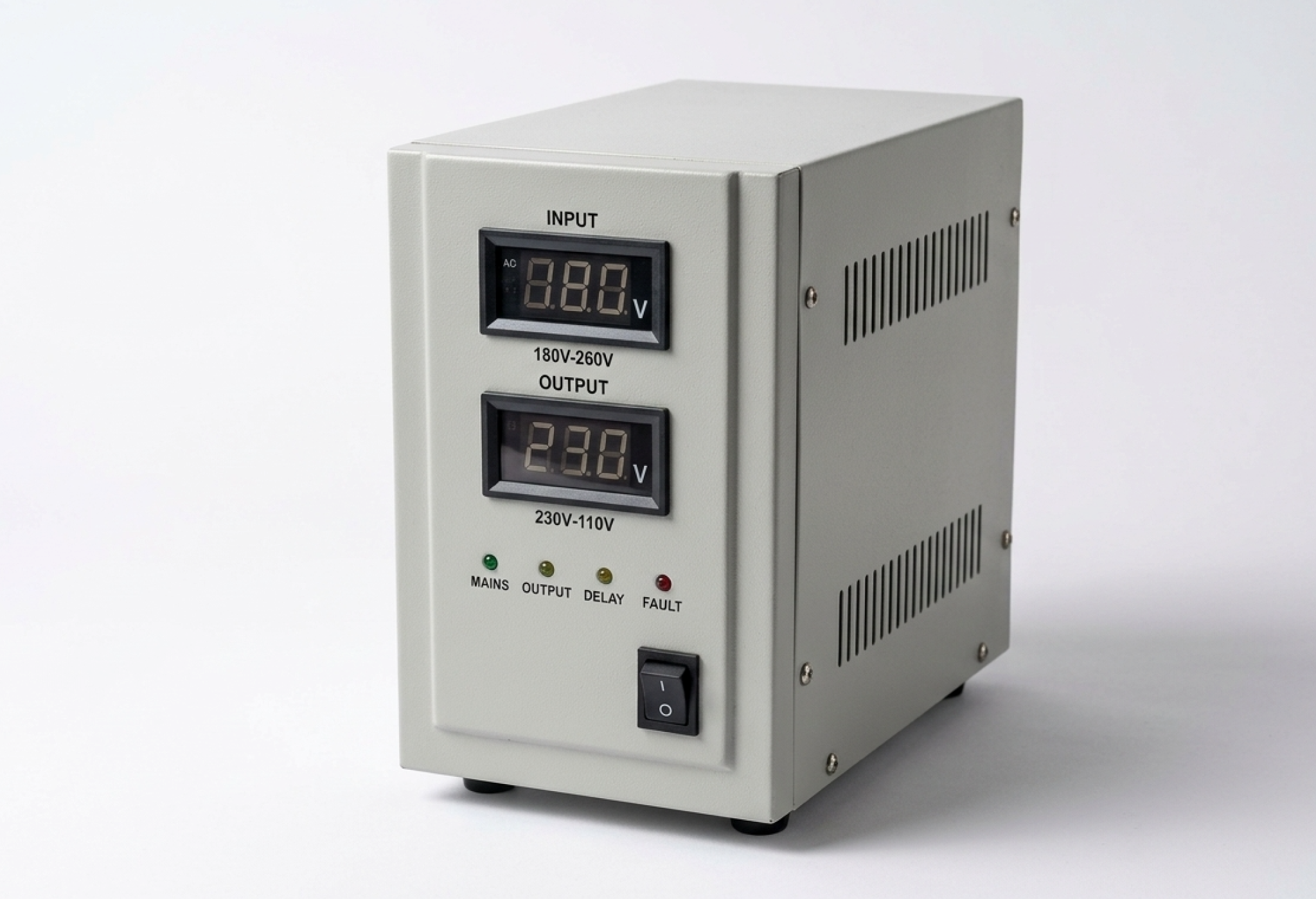
Servo Type Voltage Stabilizers
Servo type voltage stabilizers use a microprocessor-controlled servo motor to adjust the output voltage, delivering precise, continuous regulation with no waveform distortion. They are high-speed electromechanical regulators built for applications where accurate voltage matters most.
Best For: Industrial production and process control, laboratories and precision instruments, radio transmitters, testing rooms, computer and IT equipment, and large homes and commercial buildings.
Key Benefits: Microprocessor DSP control, precise regulation with no waveform distortion, protection against brownouts and over-voltage, short-circuit and overload protection, digital indicators, surge spike and lightning protection, high-response low-inertia servo motors, and simple construction for easy maintenance.
Available Range:
- Single-Phase (1/1) Servo AVR: 500VA to 30kVA (view spec sheet)
- Three-Phase (3/3) Servo AVR: 1.5kVA to 100kVA (view spec sheet)
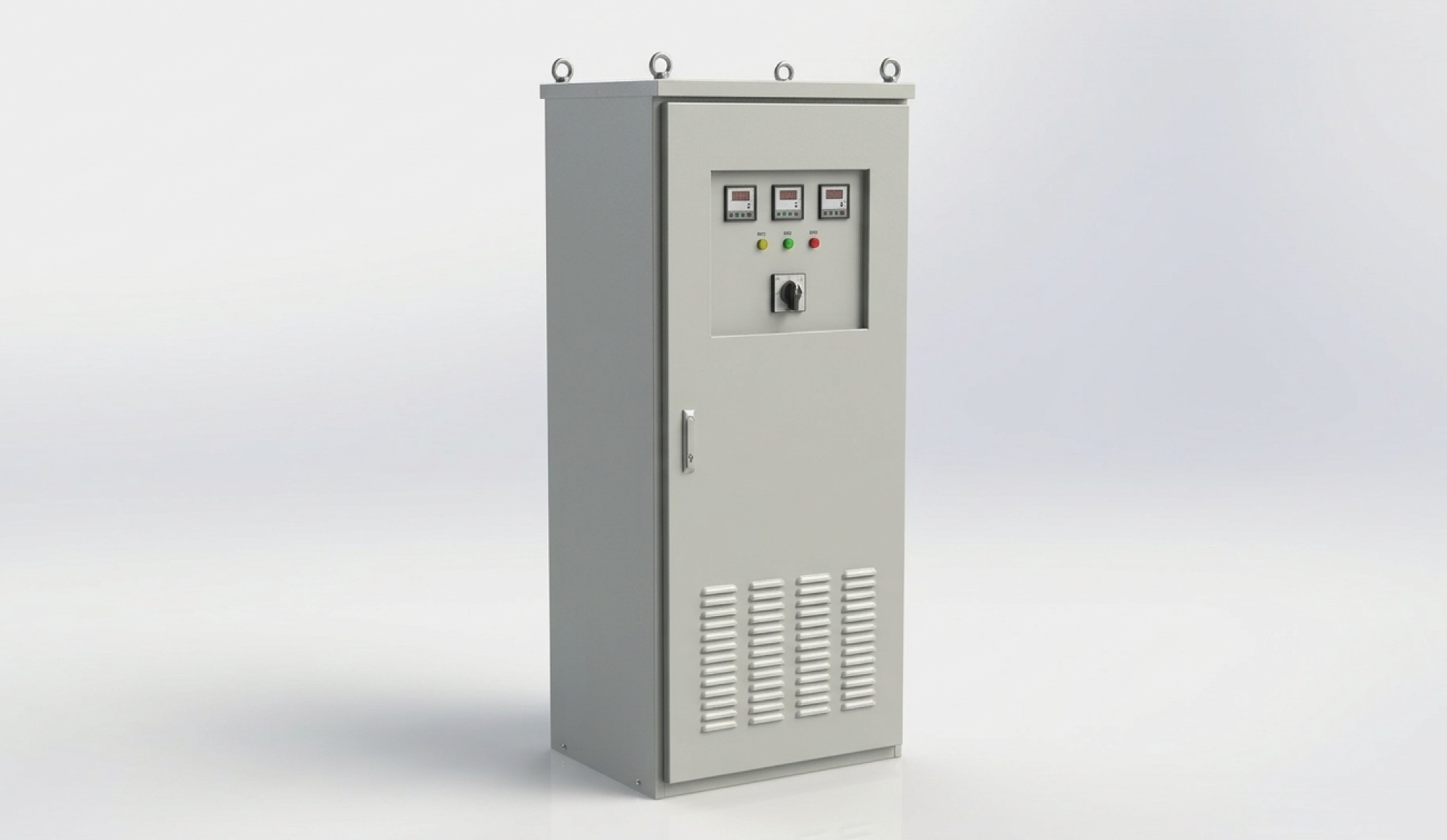
Electronic Type Voltage Stabilizers
Electronic type voltage stabilizers correct the voltage using electronic switching instead of a motor, so they have no moving parts and respond very quickly to changes in the supply. PHD’s three-phase electronic range is available with isolation and in outdoor enclosures.
Best For: Sites with rapid voltage fluctuations, three-phase commercial and industrial loads, remote or outdoor installations, and applications where low maintenance is a priority.
Key Benefits: No moving parts, fast reaction times, optional isolation transformer, optional outdoor enclosure for isolated installations or where space is limited, and low maintenance requirements.
Available Models:
- Electronic Type – Indoor: three-phase, optional isolation (view spec sheet)
- Electronic Type – Outdoor: three-phase in a weatherproof enclosure (view spec sheet)
Supervolt Power Voltage Stabilizers
The Supervolt range of power voltage stabilizers and voltage regulators provides dependable voltage regulation for commercial and industrial power applications.
Best For: Commercial and industrial installations that need robust, transformer-based power regulation.
Specifications: See the Supervolt power voltage stabilizers spec sheet or contact our team for sizing.
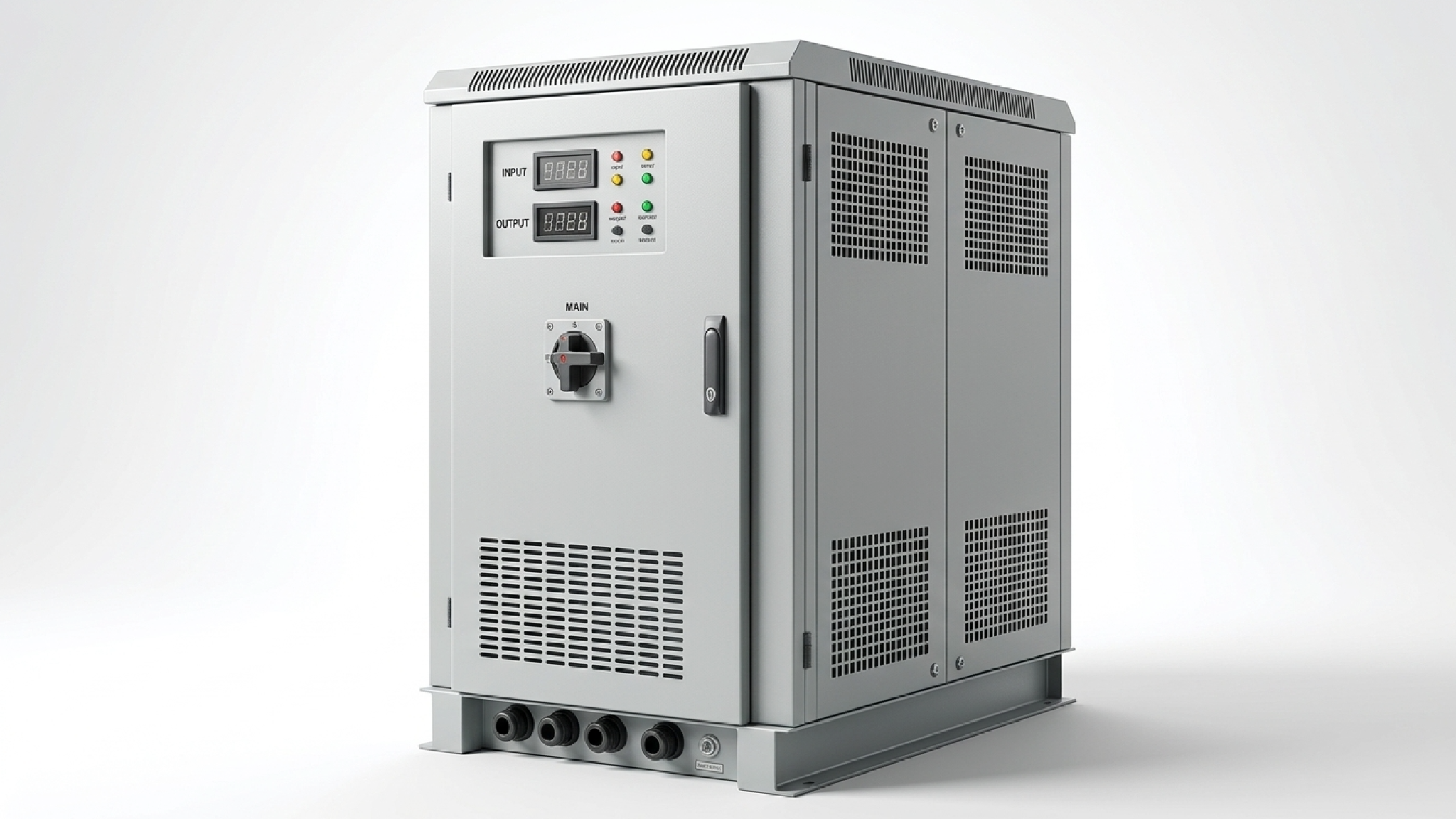
Isolation Transformers
Isolation transformers transfer power between separate primary and secondary windings by electromagnetic induction, with no direct electrical connection between them (galvanic isolation). This protects people against electric shock, suppresses electrical noise and protects sensitive equipment.
Best For: Medical equipment, laboratory and test equipment (such as oscilloscope measurement), computers and industry-specific electronics, and any installation that needs a clean, isolated supply.
Key Benefits: Galvanic isolation for safety, electrical noise suppression, protection for sensitive devices, and the ability to step voltage up or down to suit the equipment.
Interface Transformers: an easily adjustable tap-changer accepts 380VAC to 415VAC nominal input and delivers a 400VAC three-phase output, the European standard voltage used by much of the equipment supplied in Southern Africa.
Understanding Voltage Stabilizer Technology
Servo Type vs Electronic Type Voltage Stabilizers
| Feature | Servo Type | Electronic Type |
|---|---|---|
| How It Regulates | Servo motor adjusts a variable transformer | Electronic switching, no motor |
| Response Speed | Fast for gradual voltage changes | Very fast, suits rapid fluctuations |
| Regulation | Very precise, continuous, no waveform distortion | Fast correction within a set voltage band |
| Moving Parts | Yes (servo motor) | None |
| Maintenance | Periodic servicing of moving parts | Low |
| Phase Options at PHD | Single-phase (500VA-30kVA) and three-phase (1.5kVA-100kVA) | Three-phase, indoor and outdoor |
| Best For | Precision equipment, laboratories, large loads | Rapid fluctuations, remote and outdoor sites |
Voltage Stabilizer Sizing Guide
Choosing the right voltage stabilizer capacity:
- Calculate Total Load: Add up the wattage of all equipment the stabilizer will supply
- Convert to kVA: Divide watts by the power factor (use 0.8 if unknown)
- Allow for Start-Up: Motors, pumps and compressors need 3-5x their running power when starting
- Add Headroom: Choose a stabilizer 20-30% larger than the calculated load
- Confirm Phase & Input Range: Single- or three-phase, and how far your supply voltage actually drops or rises
Example: A 3kW load at a 0.8 power factor is 3.75kVA. Adding 25% headroom gives about 4.7kVA, so a 5kVA voltage stabilizer is a sensible choice.
Voltage Stabilizer vs UPS vs Surge Protector
| Device | What It Does | What It Does Not Do |
|---|---|---|
| Voltage Stabilizer | Corrects sustained under-voltage (brownouts) and over-voltage | Does not provide power during a blackout or load shedding |
| UPS System | Provides battery backup and power conditioning for critical equipment | Runtime is limited by battery capacity; not sized for large motor loads |
| Surge Protector | Clamps short, high-energy spikes from lightning and switching | Does not correct sustained high or low voltage or provide backup power |
Learn more in our Voltage Stabilizers Guide.
Applications & Use Cases
Homes
Voltage stabilizers for homes protect:
- Fridges, freezers and air conditioners
- TVs, entertainment systems and home computers
- Washing machines, dishwashers and pool pumps
- Whole-home protection with a single-phase AVR at the DB board
Commercial & Office
Voltage regulators for businesses protect:
- IT equipment and server rooms (combined with a UPS system)
- Retail refrigeration and point-of-sale systems
- Lifts, HVAC and building services
- Office equipment in buildings with unstable supply
Industrial & Manufacturing
Three-phase voltage stabilizers protect:
- Production lines and process control equipment
- CNC machines and motor-driven equipment
- Testing rooms and quality control equipment
- Equipment running on generator power
Medical, Laboratory & Telecoms
Voltage stabilizers and isolation transformers protect:
- Medical and diagnostic equipment
- Precision laboratory instruments
- Radio transmitters and telecommunications equipment
- Measurement and test equipment that needs an isolated supply
Why Choose PHD Powerhouse for Your Voltage Stabilizer?
Wide Range from 500VA to 100kVA
Single- and three-phase voltage stabilizers for everything from a single appliance to a full industrial plant.
Servo, Electronic & Isolation Options
We supply both servo and electronic technologies plus isolation and interface transformers, so we recommend what suits your site, not just what we have.
Indoor & Outdoor Models
Outdoor-rated electronic stabilizers for remote installations or sites where indoor space is limited.
Expert Sizing & Support
Our trained team helps you size your voltage stabilizer correctly and supports you from our offices in Johannesburg, Cape Town and Durban.
Frequently Asked Questions About Voltage Stabilizers
What does a voltage stabilizer do?
A voltage stabilizer, also called an automatic voltage regulator (AVR), automatically keeps the voltage supplied to your equipment at a constant level. It boosts the voltage when the mains supply drops (brownouts) and reduces it when the supply rises too high, so connected equipment always receives the voltage it was designed for.
Does a voltage stabilizer work during load shedding?
No. A voltage stabilizer corrects voltage that is too high or too low, but it cannot supply power when the grid is off. For backup power during load shedding, you need a UPS system or an inverter with batteries. Many installations combine a stabilizer with a UPS or inverter for both stable voltage and backup power.
What size voltage stabilizer do I need?
Add up the power of all equipment the stabilizer will supply and convert it to kVA (kVA = watts ÷ power factor). Allow 3-5x the running load for motors and compressors at start-up, then add 20-30% headroom. For example, a 3kW load at 0.8 power factor is 3.75kVA, so a 5kVA stabilizer is a sensible choice. Our team can help with precise sizing.
Which is better: a servo type or electronic type voltage stabilizer?
Neither is better in every case. Servo type voltage stabilizers give very precise, distortion-free regulation and suit precision equipment and large loads. Electronic type voltage stabilizers have no moving parts and react faster, which suits sites with rapid voltage fluctuations and installations where low maintenance is important.
Do I need a voltage stabilizer for my home?
You need one if your supply voltage regularly drops or rises outside the range your appliances are designed for. Common signs are lights dimming or flickering, appliances tripping or failing early, and fridges or air conditioners struggling to start. Homes at the end of long supply lines, in rural areas or on overloaded networks are most affected. A single-phase stabilizer can protect the whole house or individual appliances.
Is a voltage stabilizer the same as a surge protector?
No. A voltage stabilizer corrects sustained under-voltage and over-voltage that lasts seconds, minutes or hours. A surge protector clamps very short, high-energy spikes from lightning and switching that last microseconds. For complete protection, use both.
What is the difference between a voltage stabilizer and an isolation transformer?
A voltage stabilizer keeps the output voltage constant when the input changes. An isolation transformer separates the equipment electrically from the mains supply (galvanic isolation), which improves safety against electric shock and suppresses electrical noise. Some installations use both, and PHD’s electronic type stabilizers are available with an optional isolation transformer.
Can I use a voltage stabilizer with a generator?
Yes. Generator output voltage can fluctuate as loads switch on and off, and a voltage stabilizer helps keep the supply to sensitive equipment steady. Size the stabilizer for the connected load and make sure the generator is large enough to supply both.
Where can I buy voltage stabilizers in South Africa?
PHD Powerhouse supplies voltage stabilizers across South Africa from offices in Johannesburg, Cape Town and Durban. Our range includes single- and three-phase servo type, electronic type and Supervolt voltage stabilizers, plus isolation transformers, with expert sizing advice.
Protect Your Equipment Today
Don’t let unstable voltage shorten the life of your equipment. Invest in a quality voltage stabilizer and keep your home, business or plant running smoothly.
Call Us Today
- Get Expert Voltage Stabilizer Advice
- Accurate Load Sizing
- Single & Three-Phase Solutions
- Indoor & Outdoor Options
- Ongoing Support